


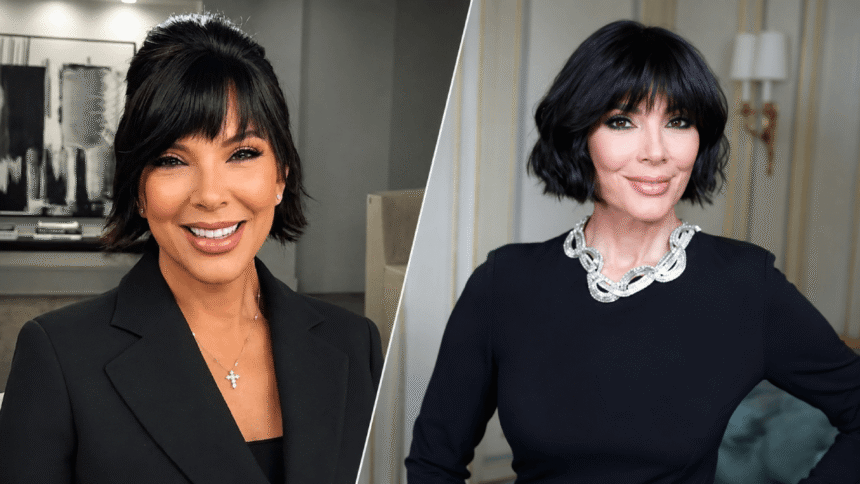
Kris Jenner is frequently described as the world’s most famous “momager”, but the nickname understates what she built. She did not simply manage six children who happened to become celebrities. She helped create a family-owned media system in which television attention could be converted into fashion, beauty, endorsements and intellectual property.
Since Keeping Up With the Kardashians premiered in 2007, the Kardashian-Jenner family has survived changing networks, social platforms, consumer habits and cultural attitudes towards fame. Their visibility has never depended on one television series or one family member.
The real Kris Jenner strategy is diversification. A programme creates attention, attention supports a product, the product creates a new storyline, and the storyline returns viewers to the programme.
Before the Empire Became a Television Format
Kristen Mary Houghton was born in San Diego in 1955. Before becoming a public figure, she worked as a flight attendant and later built a family life in Southern California.
Her first marriage was to lawyer Robert Kardashian, with whom she had four children: Kourtney, Kim, Khloé and Rob. Robert became nationally recognised as part of O. J. Simpson’s legal defence team during the 1995 murder trial.
After their divorce, Kris married Olympic decathlete Caitlyn Jenner, who was then publicly known as Bruce Jenner. They had two daughters, Kendall and Kylie. The marriage ended in divorce in 2015.
By the time reality television entered the household, the family already contained several elements producers understood immediately: wealth, recognisable social connections, contrasting personalities and a willingness to argue openly.
What it lacked was a structure capable of turning those elements into an enduring business. Kris supplied that structure.
Keeping Up Made the Home a Production Asset
Keeping Up With the Kardashians premiered on E! in October 2007. Ryan Seacrest served as an executive producer, but Kris became the programme’s essential internal organiser and one of its most recognisable cast members.
The series transformed domestic space into entertainment. Kitchens, bedrooms, restaurants and family holidays became stages on which private disagreements could be recorded, edited and distributed internationally.
Los Angeles was equally important. The programme presented a version of the city organised around gated homes, beauty appointments, boutiques, entertainment offices and highly photographed restaurants. It was not a travel guide to Southern California; it was a map of how celebrity circulated through it.
The family home was the centre of that map. It operated simultaneously as a residence, workplace and recurring set. Personal milestones supplied content, while the programme increased the commercial value of every person and product appearing inside the frame.
Kris understood earlier than many reality personalities that the programme itself did not need to generate every dollar. Its greater value was promotional: it kept the family culturally present between launches, appearances and controversies.
The “Momager” Label Hides a Corporate Role
Kris’s management arrangement has often been reduced to the claim that she receives 10 per cent of her children’s earnings. She has confirmed that she proposed such an arrangement in exchange for putting her time and effort into their careers, although her precise current income remains private.
A percentage explains the incentive but not the work.
Managing the family has involved negotiating contracts, evaluating partnerships, assembling professional teams and deciding which opportunities reinforce each person’s public identity. Kris has also served as an executive producer, giving her a role in the television machinery that creates and distributes the family narrative.
Each daughter developed a different commercial lane. Kim became associated with beauty, fashion and later shapewear. Khloé moved into denim, fragrance and lifestyle products. Kourtney built a wellness-focused identity. Kendall developed a modelling career and tequila brand, while Kylie used social-media influence to build a cosmetics business.
The businesses have separate teams and ownership structures, but the family connection gives them shared promotional infrastructure. One member’s launch can appear on another’s social feed, become a television scene and generate entertainment coverage without relying entirely on conventional advertising.
In a detailed interview about the family’s business structure, Forbes examined Jenner’s management fees and reported equity interests. The exact holdings may change over time, but the underlying strategy remains clear: Kris has sometimes participated as an owner or investor, not only as a manager collecting commission.
The Family Became a Portfolio of Brands
The Kardashian-Jenner empire works because its members are differentiated without becoming disconnected.
Kim’s audience does not perfectly overlap with Kendall’s, just as a customer interested in Khloé’s inclusive denim may not purchase Kourtney’s wellness products. Yet every brand benefits from the public’s awareness of the wider family.
This resembles a corporate portfolio more than a collection of unrelated celebrity ventures. Each person has an individual identity, while the Kardashian-Jenner name reduces the cost of gaining attention.
Kris’s non-obvious skill has been managing controlled separation. If every daughter launched identical products, they would compete directly and weaken one another’s positioning. By encouraging distinct categories and tones, the family can occupy more of the consumer market without abandoning its shared story.
The arrangement is not risk-free. A controversy involving one member can affect the reputation of the others. Audiences may also grow tired of products that appear to exist primarily because the family already has attention.
Kris’s response has generally been to keep the system moving. When one category loses energy, a new programme, partnership or business creates another point of entry.
Moving from E! to Hulu Preserved Control
Keeping Up With the Kardashians ended in 2021 after 20 seasons. The family returned the following year with The Kardashians, produced for Hulu and distributed internationally through Disney+.
The move was presented as a new chapter rather than a simple continuation. The visual style became more polished, individual business ventures received greater attention and the family members appeared more directly involved in shaping what the programme included.
Kris remained both a cast member and executive producer. Her role was no longer merely to organise the family within scenes; she helped preserve the franchise while television shifted from cable schedules to global streaming libraries.
By 2026, Hulu had brought all 20 seasons of Keeping Up With the Kardashians together with selected spin-offs and the newer series. The acquisition turned almost two decades of family footage into a unified streaming archive.
That archive has commercial value beyond nostalgia. New viewers can encounter a current product or social-media moment and then move backwards through the programmes that established the family’s mythology.
Hulu’s official announcement about the Kardashian television catalogue describes the franchise as an enduring part of popular culture. Seasons one to seven of The Kardashians are currently available, while Kris confirmed in 2026 that the family was filming another instalment.
Kris Jenner at 70
Kris turned 70 in November 2025. The milestone might suggest retirement in a conventional career, but her public work continues across television, management and production.
Her longevity matters because celebrity culture often prioritises youth, particularly for women. Kris has instead made age part of her authority. She does not need to compete directly with her daughters as a fashion model, beauty founder or influencer. Her identity is built around access, judgement and the ability to connect people.
She has also become a celebrity independent of her management role. Her wardrobe, home, relationships and friendships generate coverage, while her distinctive communication style has produced countless memes and catchphrases.
This dual position is commercially useful. Kris can negotiate behind the scenes and then appear on camera to convert the negotiation into entertainment. Few celebrity managers are themselves valuable cast members; fewer reality stars control so much of the structure surrounding their appearances.
Her influence has also extended into scripted production. Kris received an executive-producing credit on the legal drama All’s Fair, starring Kim Kardashian alongside actors including Naomi Watts, Niecy Nash-Betts, Sarah Paulson and Glenn Close.
The Ethical Cost of Monetising Intimacy
The Kardashian-Jenner model is commercially impressive, but it should not be discussed without examining its costs.
The family’s relationships, pregnancies, health concerns, separations and conflicts have all become entertainment. Participants may retain significant control, but consent becomes complicated when filming begins during childhood and the programme itself supports the family business.
Kendall and Kylie were minors when Keeping Up With the Kardashians started. Their development into public-facing entrepreneurs took place inside a system that had already made their lives commercially valuable.
This does not mean every television moment was false or exploitative. It means authenticity and commerce were operating together. A genuine family disagreement could also become a trailer, an episode and a week of publicity.
Kris’s talent lies partly in recognising that modern audiences do not require a perfect family. Conflict can increase engagement, provided the family unit remains strong enough to continue producing stories.
The ethical question is therefore not whether the Kardashians are “real”. It is how much private experience should become a family asset—and whether every participant has equal power to decide.
Why the Formula Has Lasted
Many reality programmes produce famous personalities. Very few create a commercial system that remains active for nearly two decades.
The Kardashian-Jenner franchise has lasted because Kris treated attention as a renewable resource rather than a one-time prize. Television generated recognition, but businesses gave that recognition somewhere to go. Social media reduced dependence on networks, while streaming preserved the family’s history for new audiences.
She also understood that reinvention does not require abandoning the original story. The packaging can change from E! to Hulu, from boutiques to billion-dollar consumer brands and from tabloid photographs to direct social publishing. The central promise remains the same: viewers are being invited inside a family that lives unusually public lives.
That invitation is carefully managed, even when the resulting scenes appear spontaneous.
Kris Jenner’s most significant creation is not one daughter’s company or one successful television programme. It is an ecosystem in which family, fame and commerce continually advertise one another.
Frequently Asked Questions
How old is Kris Jenner?
Kris Jenner was born on 5 November 1955 and is 70.
How many children does Kris Jenner have?
She has six children: Kourtney, Kim, Khloé, Rob, Kendall and Kylie.
Why is Kris Jenner called a momager?
The term combines “mum” and “manager” and describes her role managing her children’s careers.
Is Kris Jenner still on television?
Yes. She stars in and executive-produces Hulu’s The Kardashians.
Is Kris Jenner married?
No. She has been married twice and is currently in a long-term relationship with Corey Gamble.
What businesses does Kris Jenner own?
Her interests have included production, management, Safely and stakes in family businesses.
Read more like on Kristen Bell Husband: Inside Her Marriage to Dax Shepard.