


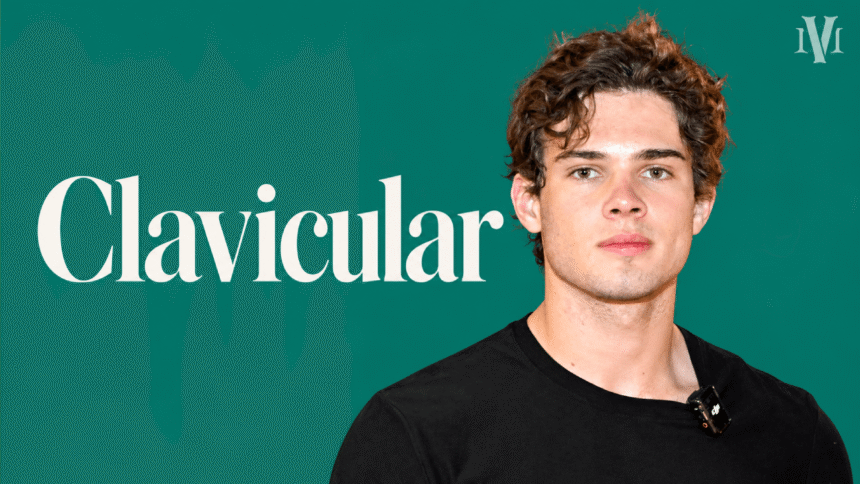
Clavicular is the online name of Braden Peters, an American influencer whose appearance-focused videos and livestream clips have spread across TikTok, Instagram and other platforms. He became known for promoting “looksmaxxing”: an internet subculture concerned with maximising physical attractiveness, sometimes through extreme and potentially harmful methods.
For anyone searching “Clavicular TikTok”, the explanation extends beyond one viral account. His visibility grew through livestreaming, provocative encounters and a network of people circulating short extracts from longer broadcasts.
His current public profile also includes serious criminal allegations. Massachusetts authorities charged Peters in September 2026 with rape and related offences concerning an alleged incident in May 2025. He denies the allegations. The latest Associated Press reporting, published ahead of 22 October 2026, said his arraignment was scheduled for that day; it did not report a completed hearing or verdict.
Who Is Clavicular on TikTok?
Peters emerged as a social-media personality in 2025, sharing content centred on physical transformation, attractiveness and interactions with other people. His public identity developed across TikTok, the livestreaming platform Kick and Instagram.
His name reflects the importance placed on collarbones and body proportions within looksmaxxing culture. The language surrounding his content treats appearance as something to measure, compare and continually improve.
That approach helps explain his recognisable online persona. His videos turn attractiveness into a competitive activity, with people assessed against narrow standards of facial structure and physique.
Reporting about his early life describes a young man from New Jersey who became immersed in online appearance forums before reaching a mainstream audience. Many details about his transformation come from his own statements, however, and should be understood as personal claims rather than independently verified medical history.
What Does Looksmaxxing Mean?
Looksmaxxing is an umbrella term covering attempts to improve physical appearance. Its less invasive end includes familiar activities such as grooming, skincare, exercise and changing clothes or hairstyles.
The more extreme end can involve cosmetic procedures, substance misuse and deliberate injury. Community terminology often distinguishes between “softmaxxing” and “hardmaxxing”, although those labels do not establish whether something is safe or effective.
The broader concern is the worldview attached to the advice. Some content suggests that social acceptance, relationships and personal worth depend on meeting a tightly defined physical ideal.
Cleveland Clinic’s explanation of looksmaxxing identifies that connection between appearance and self-worth as a particular concern for teenagers. Psychologist Susan Albers describes how the culture can intensify insecurities at an age when belonging and approval already carry considerable weight.
Those concerns do not mean every viewer experiences the content in the same way. They do explain why a trend presented as self-improvement has attracted scrutiny from health professionals.
How His Livestreams Became TikTok Content
Calling Peters simply a TikTok creator misses an important part of his rise. Much of the material associated with him comes from lengthy livestreams that are edited into short, attention-grabbing videos.
These extracts can travel much further than the original broadcast. Someone might repeatedly encounter Clavicular on their feed without following him or watching a full stream.
Bloomberg reporting, republished by The Star in May 2026, examined paid clipping campaigns supporting his visibility. It described contractors selecting moments from his broadcasts and distributing them across short-video platforms.
The report cited promotional figures from a marketing firm working with him, rather than independently audited audience totals. Even with that limitation, it supplied an important explanation for his apparent ubiquity: distribution involved organised promotion alongside ordinary sharing.
The distinction matters when assessing internet popularity. Repeated exposure can make someone seem universally admired, but viewing, following, mocking and supporting are different behaviours. A person can become highly recognisable while attracting sharply divided reactions.
Why the Clips Attract Attention
Clavicular’s content combines physical comparison, unfamiliar slang and awkward social encounters. Each offers material that can be understood quickly enough to stop somebody scrolling.
“Mogging”, for example, describes supposedly outshining another person through appearance. A brief encounter can therefore become a competition once a caption supplies that interpretation.
The Verge’s reporting on the clipping economy highlighted a circulated video framed around Peters being “frame mogged”. The appeal depended partly on the caption’s strange vocabulary and its invitation to judge the people shown.
This makes the audience an active participant. Viewers do not simply watch an interaction; they are encouraged to rank it, dispute the result or repeat the terminology.
That format is effective entertainment, but it also simplifies people into a small set of visible characteristics. The joke and the underlying hierarchy can travel together, even when a viewer intends only to laugh at the language.
From Online Forums to Fashion Coverage
By February 2026, Peters’ visibility had extended into New York Fashion Week, where he walked for designer Elena Velez.
A GQ profile followed his time in the city, documenting a mixture of runway appearances, interviews, nightlife and encounters with supporters and critics.
The fashion appearance marked a crossover between an internet subculture and an industry built around appearance. It also generated more material for the same online audiences that had made him recognisable.
A runway booking demonstrates cultural visibility, rather than validating an influencer’s wider claims. In Peters’ case, it showed how quickly a controversial online personality could become part of a fashion-week conversation.
Why His Appearance Advice Has Drawn Criticism
Peters has publicly discussed extreme approaches to changing his appearance, including drug use and “bonesmashing”. His descriptions of what he has done should not be treated as proof that those practices produced the results he claims.
Bonesmashing involves deliberately striking facial bones in the belief that healing will create a more desirable structure. Cleveland Clinic states that the claimed cosmetic benefit lacks evidence and identifies the practice as self-injury.
The wider problem is how dramatically different activities can be packaged together. A video may move from ordinary grooming to invasive or harmful behaviour while presenting everything as part of one improvement programme.
That presentation can blur the distinction between entertainment, personal testimony and qualified medical advice. A persuasive delivery or striking before-and-after image does not establish expertise, safety or cause and effect.
These are concerns about the content and its claims. They do not justify diagnosing Peters or individual viewers with a mental-health condition.
The Massachusetts Charges and Latest Court Position
The criminal case is now a central part of current coverage.
According to court records reported by Reuters, a criminal complaint issued on 8 September 2026 charged Peters with rape, drugging a person for sexual intercourse, and procuring alcohol for someone under 21. The allegations concern a 17-year-old girl and an alleged incident at his family’s Cape Cod home in May 2025.
Peters denies wrongdoing. An accusation and a criminal charge do not establish guilt.
Earlier reports listed 14 October as the arraignment date. Subsequent reporting placed the hearing on 22 October. The Associated Press report ahead of the scheduled arraignment described the case as pending.
An arraignment is a procedural stage, rather than a trial verdict. The reporting available for this article did not establish the outcome of the scheduled hearing.
A separate development requires equal precision. On 14 October, Massachusetts broadcaster WHDH reported that sexual-assault claims had been dropped from a civil case filed in Miami. It explicitly stated that the Massachusetts criminal rape charges remained.
The civil development should therefore not be described as dismissal of the criminal prosecution. The two proceedings have distinct legal purposes and outcomes.
What Clavicular’s Rise Reveals About Online Fame
Clavicular’s story brings together appearance anxiety, commercial promotion and a style of celebrity sustained by constant circulation.
His reach shows how a personality can become familiar through fragments: a comparison, an argument, a runway appearance or a provocative claim. That visibility can obscure the difference between something being widely watched and something being trustworthy.
Understanding his TikTok presence means keeping those distinctions intact. His influence is real, his appearance claims require scrutiny, and the criminal allegations must be assessed through the legal process.
Frequently Asked Questions
Who is Clavicular on TikTok?
Clavicular is Braden Peters, an American influencer known for looksmaxxing content and clips from his livestreams.
What does the name Clavicular mean?
It refers to the clavicles, or collarbones, reflecting looksmaxxing culture’s emphasis on body proportions.
Is Clavicular only a TikTok creator?
No. His public presence developed across TikTok, Kick and Instagram, with livestream extracts circulating beyond his own accounts.
What is looksmaxxing?
Looksmaxxing means attempting to maximise physical attractiveness. Content under the label ranges from ordinary grooming to invasive or harmful practices.
What charges is Clavicular facing?
Massachusetts reporting identifies charges of rape, drugging a person for sexual intercourse and procuring alcohol for someone under 21. Peters denies the allegations.
Were the criminal charges against Clavicular dropped?
The latest reporting reviewed described the Massachusetts case as pending. The withdrawal of sexual-assault claims from a separate civil case did not dismiss those criminal charges.
Read more like on Justin Timberlake DUI: Arrest, Plea Deal and What Happened in Sag Harbor.