


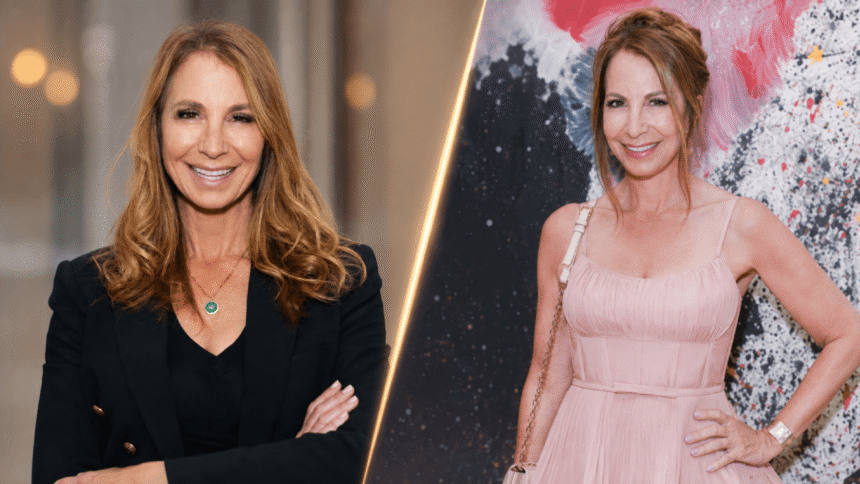
The connection between Jill Zarin and Bad Bunny began with a deleted Instagram video and ended, less than two days later, with Zarin losing her place in a new reality television series.
After watching Bad Bunny’s Super Bowl LX halftime performance on 8 February 2026, the former Real Housewives of New York City cast member criticised the show for being predominantly in Spanish and claimed it did not include white performers. She also described it as the worst Super Bowl halftime show she had seen.
The response was immediate. Viewers and media organisations characterised her comments as racist, particularly because her criticism moved beyond musical preference and objected explicitly to the ethnicity of the people represented on screen.
Blink49 Studios subsequently removed Zarin from The Golden Life, an E! docuseries reuniting several original RHONY personalities in Palm Beach. The decision arrived only one week after her involvement had been announced.
What might otherwise have been another short-lived celebrity controversy consequently produced a measurable professional cost. It also exposed a larger disagreement over who is allowed to represent America during its most-watched cultural event.
What Did Jill Zarin Say About Bad Bunny?
Zarin posted her reaction while Bad Bunny’s Super Bowl LX halftime performance was still generating discussion online.
In the now-deleted video, she objected to the show being performed mainly in Spanish and complained about the absence of white people. She also suggested that the production was political and criticised Lady Gaga’s appearance during the performance.
Disliking a halftime show is not itself unusual. Every Super Bowl performance produces competing opinions about song choices, staging, sound quality and whether the selected artist appeals to a sufficiently broad audience.
Zarin’s comments became different because they did not remain a criticism of music. Her objection to Spanish and racial representation implied that a performance centred on Puerto Rican and Latin culture was somehow inappropriate for an American event.
That premise is historically flawed. Puerto Ricans are United States citizens, and Spanish has been spoken across parts of what is now the United States for centuries. More than 65 million people of Hispanic or Latino origin live in the country, while Spanish is one of its most commonly used languages.
Bad Bunny’s performance was therefore not an imported culture replacing an American one. It was an American cultural event presenting a part of the country that network television has often treated as secondary.
Why Bad Bunny’s Performance Was Historically Important
Bad Bunny, whose real name is Benito Antonio Martínez Ocasio, became the first Latino artist to headline the Super Bowl halftime show as a solo performer.
He had previously appeared as a guest during Jennifer Lopez and Shakira’s 2020 show, but the 2026 production allowed him to construct the entire performance around Puerto Rican identity.
The stage included a sugarcane field, domino players, food stands, musicians and scenes inspired by ordinary social life. More than 300 dancers participated, while Lady Gaga and Ricky Martin appeared as musical guests.
Bad Bunny performed predominantly in Spanish because Spanish is the principal language of his music and the culture being celebrated. Adding large sections of English purely to reassure some viewers would have weakened the performance’s central idea.
The show was not designed to make every audience member recognise every lyric. Its storytelling relied on rhythm, movement, costume, familiar social scenes and the emotional meaning of a community seeing itself represented at an enormous scale.
A real wedding took place during the production, while the ending displayed a message presenting America as a shared identity rather than a single ethnicity or language.
That vision explains why Zarin’s reaction attracted more than ordinary disagreement. She appeared to interpret cultural specificity as exclusion even though Super Bowl stages have historically centred English-language performers without facing equivalent demands to represent every American community.
Jill Zarin Was Preparing for a Major Television Return
Before the controversy, Zarin was scheduled to appear in The Golden Life, a new E! reality series set in Palm Beach, Florida.
The programme was designed to reunite several personalities from the original era of The Real Housewives of New York City. Its announced cast included Zarin, Luann de Lesseps, Ramona Singer, Sonja Morgan and Kelly Bensimon.
For Zarin, the show represented a significant opportunity.
She joined RHONY when the programme premiered in 2008 and remained a central cast member for four seasons. Her friendship and later conflict with Bethenny Frankel became one of the franchise’s defining early storylines.
Zarin left the regular cast after the fourth season but continued making guest appearances across the wider Real Housewives universe. She also appeared in The Real Housewives Ultimate Girls Trip: Ex-Wives Club.
However, The Golden Life would have returned her to a continuing ensemble built around familiar relationships. Its Palm Beach setting also suited the next stage of the cast members’ lives, moving them away from their original New York social environment while preserving the dynamics that made them recognisable.
E! announced the project on 3 February 2026. Zarin posted her Bad Bunny video five days later. By 10 February, she was no longer part of the production.
Why Was Jill Zarin Fired?
Blink49 Studios said it had decided not to proceed with Zarin’s involvement in light of her public comments.
The production company did not need to wait for filming because Zarin’s continued presence would immediately have changed the series. Every interview, promotional appearance and scene involving her would have generated questions about the Bad Bunny remarks.
Reality television regularly profits from controversial behaviour, so removing a cast member should not automatically be mistaken for a principled rejection of conflict. Arguments, poor judgement and offensive comments can all create publicity.
The calculation changes when a controversy threatens the production itself. Advertisers, network executives, other cast members and viewers may become reluctant to support a programme perceived as rewarding racially exclusionary remarks.
Zarin’s removal was therefore both a values decision and a commercial one. Keeping her might have given The Golden Life short-term attention, but it could also have made the entire series responsible for managing a crisis before cameras had properly started rolling.
Blink49 Studios confirmed Zarin’s departure in a statement reported by Variety. The programme proceeded without her, and Dorinda Medley later joined the cast.
How Did Jill Zarin Respond?
Zarin deleted the original video and acknowledged that posting it had been a mistake.
She emphasised that she had removed it quickly and described herself as human, suggesting that people sometimes speak without considering the consequences. However, the response was widely viewed as limited because it focused substantially on the fact that she had made an error rather than explaining why the substance of the remarks was harmful.
Deleting a post can prevent its further distribution from the original account, but it cannot undo the message once copies have circulated. Public figures should particularly understand this because their careers depend upon audiences recording, sharing and interpreting what they say.
A stronger response would have addressed the underlying assumptions directly: why she viewed Spanish as inappropriate, why she considered the absence of white performers a problem and what she had learned about Puerto Rican identity.
Zarin may genuinely regret the video. Assessing that regret requires looking at her later conduct rather than treating either the deletion or the professional consequence as a complete resolution.
An apology is the beginning of accountability, not evidence that the discussion should immediately end.
Her Daughter and Former Castmates Distanced Themselves
The controversy did not produce a unified defence from Zarin’s personal or professional circle.
Her daughter, Ally Shapiro, praised Bad Bunny’s performance and presented a sharply different view of the show. Sonja Morgan also expressed support for Latino communities.
The Zarin Fabrics social-media account distanced the company from the comments and stated its opposition to racism. Although Jill Zarin’s family name remains associated with the business, the company clarified that she was no longer involved in its operations.
These responses mattered because they prevented the controversy from being framed simply as hostile strangers attacking a reality star.
People close to the relevant professional and family networks were capable of separating affection or past association with Zarin from agreement with what she said. That distinction is important in public accountability: rejecting a comment does not require pretending the person who made it has no other qualities or relationships.
It requires being clear about why the statement itself was unacceptable.
The Difference Between Criticising Art and Rejecting Representation
Some of Zarin’s defenders argued that she was being punished simply for disliking a performance.
That interpretation ignores the language she chose.
A viewer could reasonably criticise the pacing, set list, vocal delivery, camera direction or balance between Bad Bunny and his guests. Artistic work does not become immune from criticism because it has cultural significance.
Objecting to the presence of Spanish or complaining that there were no white performers is different. Those comments judge which people and languages deserve space rather than how effectively the production used that space.
The distinction can be tested easily. If a critic explains that a song sequence felt repetitive, the criticism concerns artistic construction. If the critic argues that a cultural group was too visible, the criticism concerns belonging.
Bad Bunny’s show deliberately created a space in which Latin culture did not require translation or permission. Viewers unfamiliar with its references were invited to observe, listen and recognise that not every national spectacle must be built around their personal experience.
For some audiences, that shift felt celebratory. For others, including Zarin, it appears to have felt like exclusion. The controversy revealed how easily people accustomed to being centred can interpret another group’s visibility as their own disappearance.
Bad Bunny’s Audience Contradicted the Idea That the Show Was Inappropriate
The viewing figures did not suggest that a Spanish-language performance was commercially incompatible with the Super Bowl.
Bad Bunny’s halftime show averaged approximately 128.2 million viewers in the United States. It became the fourth-most-watched Super Bowl halftime performance on record, behind Kendrick Lamar, Michael Jackson and Usher.
Telemundo’s Spanish-language coverage also reached unprecedented levels for an American football broadcast. The programme generated billions of social-media video views during the first 24 hours, with a large percentage coming from outside the United States.
Those figures do not prove that every viewer enjoyed the show. Super Bowl audiences are partly inherited from the game, and controversy can increase online engagement.
They do prove that Spanish did not prevent the performance from operating as a global mainstream event.
Associated Press reporting on the audience figures confirmed that the halftime show averaged 128.2 million viewers and that Spanish-language viewership reached a new high.
Bad Bunny’s catalogue also experienced a major streaming increase after the performance. The show introduced some viewers to his music while giving an already enormous international audience a reason to revisit it.
The Controversy Was Bigger Than Two Celebrities
Bad Bunny did not need Jill Zarin’s approval to establish his cultural importance. By 2026, he was already a global streaming force, Grammy winner, actor, fashion figure and stadium-level performer.
Likewise, Zarin’s remarks were not significant because she possessed authority over Latin music. They mattered because her reaction represented a wider belief that American national identity should remain culturally white and linguistically English.
The Super Bowl is often described as a unifying event, but unity does not require cultural sameness. A programme can be nationally shared while remaining rooted in a specific place, language and history.
Bad Bunny used the world’s largest entertainment stage to make Puerto Rico visible on its own terms. Zarin responded by asking, in effect, why people like her were not more visibly included.
That reversal is what turned an Instagram opinion into a career-changing controversy.
What Happened to The Golden Life?
The Golden Life continued without Jill Zarin.
Dorinda Medley joined Luann de Lesseps, Ramona Singer, Sonja Morgan and Kelly Bensimon in the revised cast. Filming began in Palm Beach in March 2026, with the programme retaining its planned focus on friendships, social events and life after the original RHONY era.
Removing Zarin inevitably changed the reunion concept. She was an original cast member with longstanding relationships and unresolved history involving several participants.
However, reality formats are designed to survive cast changes. Medley brought her own established connections and a similarly forceful screen personality.
The greater uncertainty concerned Zarin’s future television prospects. Her removal did not legally prevent another network or producer from hiring her, but it demonstrated that social-media conduct could affect opportunities before a contract resulted in filmed material.
In an industry built around personality, the boundary between private opinion and professional product is extremely thin.
What the Jill Zarin–Bad Bunny Incident Ultimately Shows
The Jill Zarin and Bad Bunny controversy lasted only a few days, but it brought together several features of contemporary celebrity culture.
A reality star posted an immediate reaction without recognising how its racial assumptions would sound. Viewers preserved and redistributed the deleted video. A production company evaluated reputational risk and acted before filming began. Bad Bunny’s performance continued reaching a vast global audience while the response became a separate media story.
Zarin’s mistake was not that she failed to enjoy the same music as everyone else. It was that she treated the visibility of Spanish-speaking and Latino performers as evidence that something had been taken away from white viewers.
Bad Bunny’s show argued for a broader image of America. The response to Zarin showed that this broader image remains contested.
Her dismissal from The Golden Life did not resolve that argument. It established only that, in this instance, expressing cultural exclusion carried a direct professional cost.
Frequently Asked Questions
What did Jill Zarin say about Bad Bunny?
She criticised his Super Bowl halftime show for being mainly in Spanish and complained about the absence of white performers.
Why was Jill Zarin fired?
Blink49 Studios removed her from The Golden Life following the backlash over her Bad Bunny comments.
Did Jill Zarin apologise?
She deleted the video and acknowledged that posting it was a mistake, although critics considered her response insufficient.
Was Jill Zarin returning to RHONY?
She had joined an E! reunion series called The Golden Life, rather than the main Bravo programme.
Who replaced Jill Zarin on The Golden Life?
Dorinda Medley joined the cast after Zarin’s removal.
How many people watched Bad Bunny’s halftime show?
The performance averaged approximately 128.2 million US viewers.
Read more like on Dick Vitale Net Worth: How “Dickie V” Turned Enthusiasm into a Broadcasting Empire.